Your facility needs consistent cleaning schedules tailored to unique hazards, daily throughput, food allergens, and inspection schedules, including auditable records validating HACCP requirements, compliance audits, and public health regulations. The information following give details about essential cleaning protocols.
Main Points
- Brampton food safety cleaning experts assist restaurants, grocery departments, commissaries, warehouses, bakeries, schools, mobile vendors, and allergen-sensitive operations.
- They treat high-touch surfaces, food-contact equipment, kitchens, floors, drains, restrooms, and storage areas using area-specific procedures to avoid cross-contamination.
- Documentation of finalization through samples, assessments, and remedial documentation validates trained providers have confirmed proper chemical concentration, alignment, and contact time.
- Hygiene plans ought to follow danger, throughput, switches, spills, and guidelines, with daily, recurring, and periodic duties distributed by area.
- Focus on suppliers displaying HACCP, sanitation expertise, safety training training, protection, references, color-categorized tools, and compliance-ready hygiene documentation.
What Brampton Facilities Require Food Safety Cleaning?
Food safety cleaning is essential for any Brampton facility that deals with, keeps, prepares, packages, or provides food. Apply it to your business if it falls within public health review, food regulations, or HACCP protocols. This includes eateries, cafes, warehouses, supermarket areas, meat markets, fish stands, convenience outlets, and institutional food areas.
Proper hygiene protocols is essential in storage facilities, production centers, refrigerated warehouses, bakeries, school nutrition services, event spaces, and delivery hubs. Mobile and temporary operations are included, such as catering vehicles, festival vendors, and pop-up establishments. Your establishment needs documented cleaning protocols if your staff work with ingredients, section ready-to-serve foods, heat finished items, or maintain allergen storage. In Brampton, food safety stays elective; it constitutes regulatory, business, and safety compliance.
What Do Brampton Cleaning Professionals Handle?
Professional cleaning teams specializing in Brampton sanitize touched surfaces, kitchen facilities, floors, and restrooms in compliance with food safety regulations. Emphasis on these spaces occurs because they pose maximum contamination danger, potential for accidents, and compliance issues.
If you comprehend their cleaning services, you'll be able to confirm your operation satisfies all operational and regulatory compliance needs.
Focusing on High-Touch Surface Sanitizing
Brampton cleaning teams highlight high-touch surface disinfection considering the risk of bacteria, viruses, and food residue spreading across your facility. You must have a written protocol for disinfecting frequently touched items like handles, plates, switches, railings, equipment controls, payment terminals, and fridge pulls. Using contact point analysis, specialists locate every frequently handled area and set cleaning intervals
confirm that cleaning was successful
Cooking Zones, Walking Surfaces, and Restroom Environments
Expect Brampton cleaning experts to focus on kitchens, floors, and restrooms because each area carries unique food safety, slip-and-fall, and sanitation risks. In industrial kitchens, you need grease removal from cooking stations, appliance surfaces, drain systems, preparation areas, and backsplashes to minimize bacterial growth and pest activity.
Professional floor care with documentation is also included. is likewise provided as part of the service.
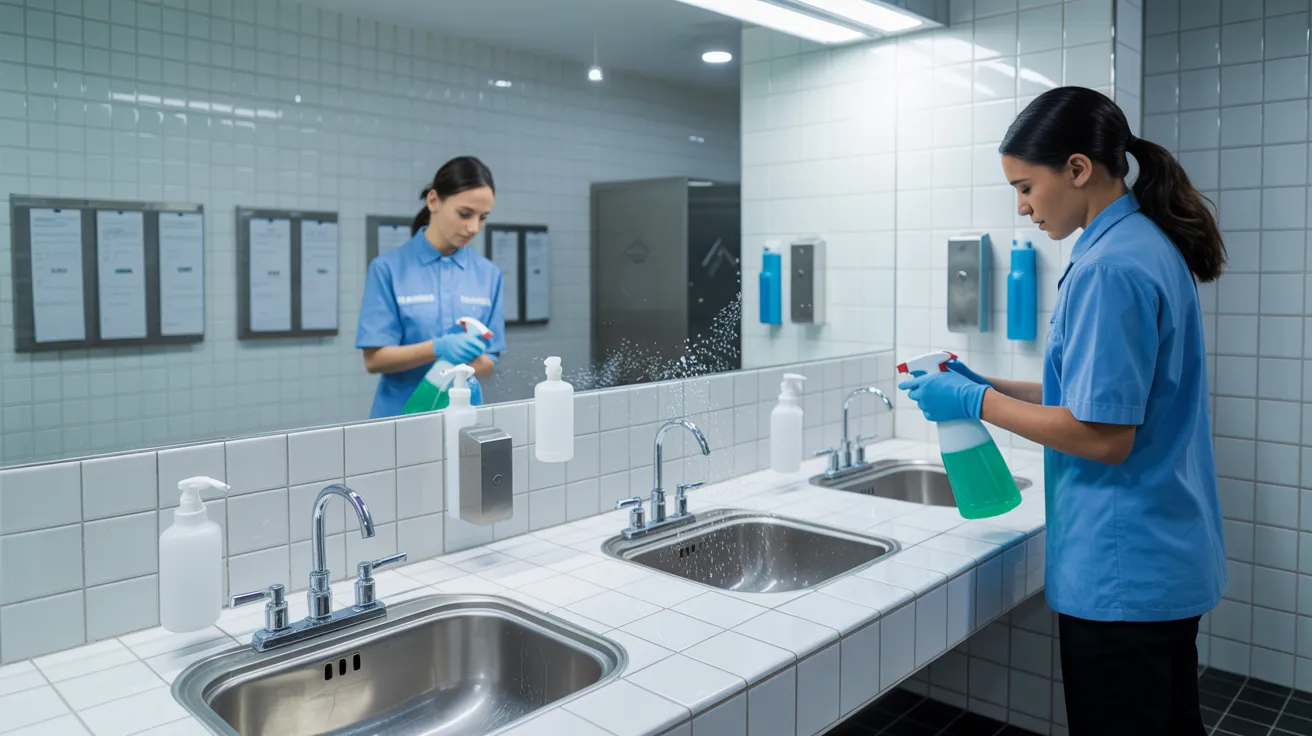
In restrooms, cleaners treat touchpoints, fixtures, partitions, dispensers, and waste containers then refill supplies and eliminate odor. They also service restaurant moprooms, where chemical storage, sink hygiene, and drainage conditions can affect sanitation compliance and staff safety daily.
The Importance of Food Safety Cleaning in Brampton
To adhere to health code requirements and pass inspections, Brampton establishments must maintain appropriate cleaning protocols. You also minimize bacterial spread through proper cleaning of food-preparation surfaces, appliances, and frequently-touched items. Most importantly, you safeguard public health by lowering the risk of foodborne illness in your facility.
Regulatory Code Requirements
Since Brampton food businesses must follow rigorous sanitary regulations, your sanitation practices directly influences your competence to adhere to health codes, safeguard diners, and eliminate regulatory penalties. You must maintain clean food preparation areas, documented cleaning schedules, correct sanitizer application, and documented employee protocols that correspond to municipal and provincial inspection expectations.
Diligent hygiene practices facilitates cross-contamination prevention by limiting particles on common tools plus regularly touched locations. If your cleaning standards slip, you risk citations, remedial directives, brand harm, and service disruption risks during subsequent audits or regulatory actions.
Cross-Contamination Prevention
Meeting health code standards also depends on your capacity to stop cross-contamination during routine food preparation and sanitation. You must keep raw items away from prepared dishes, clean work areas after each use, and store chemicals away from food-contact items. Established guidelines minimize contamination chances and ensure ongoing adherence to health checks.
Implementing allergen separation helps ensure major allergens don't touch communal work zones, bins, or devices. Utilize separate boards, color-labeled items, and strict utensil labeling so workers don't combine products during preparation or service. Require handwashing after handling fresh proteins, aquatic items, egg products, or allergen materials. Refresh cleaning cloths often, and verify sanitizer strength with test strips. When your team learns these guidelines per shift, you create a cleaner, safer operation that meets Brampton's food safety expectations regularly.
Public Health Safeguarding
When sanitation protocols breaks down, you don't just face inspection failure—you heighten the likelihood of food-related sickness affecting customers, staff, and the wider Brampton community. You also undermine your responsibility in protecting public health, especially in high-traffic food premises where pathogens travel quickly through surfaces, equipment, and touchpoints.
You require cleaning procedures that remove contaminants, sanitize properly, and confirm effectiveness. This requires following exposure times, employing authorized sanitizers, logging schedules, and instructing staff to satisfy regulatory standards. These mechanisms support disease prevention by limiting pathogens before contaminating food or surfaces. Across Brampton, effective sanitation protects at-risk populations, limits outbreak risk, and demonstrates accountability. When you follow standards, you go beyond requirements—you meaningfully reduce risk and facilitate secure food handling throughout the area.
Why Is Cleaning Essential for Food Safety Compliance?
Maintaining rigorous cleaning routines strengthens food safety compliance by lowering contamination exposure, managing pathogen expansion, and keeping your facility aligned with sanitation requirements under HACCP-based programs and public health regulations. You confirm that food-contact surfaces remain visibly clean and microbiologically controlled, backing documented preventive controls and inspection readiness.
Diligent cleaning further strengthens allergen prevention by eliminating residues that can lead to undeclared allergen exposure. When you match validated sanitation procedures with regulatory training, your staff can follow uniform procedures, use approved chemicals correctly, complete records accurately, and respond to irregularities in advance of problems worsen. Consistent cleaning enables traceability, validates corrective steps, and shows due diligence in audits. It also helps you preserve product safety, sustain regulatory compliance, and lower the chances of compliance actions, recalls, formal complaints, and unnecessary health hazards.
How Do You Plan Commercial Cleaning Services?
cleaning routines or between shifts wherever surfaces contacting food, washrooms, and high-touch areas
facility shutdowns, weather-driven soil accumulation, or periods of high pest concerns.
What Should You Look For in Brampton Cleaning Experts?
Begin by evaluating providers based on sanitation compliance standards—not solely on budget. You should confirm that each organization comprehends CFIA, public health, and HACCP-aligned expectations applicable to your facility. Request proof of insurance, WHMIS compliance, staff training documentation, and oversight procedures. Assess whether technicians recognize cross-contamination risks, chemical handling protocols, and verifiable sanitation records.
You should also assess business dependability and responsibility. Request references from Brampton food businesses, then examine response times, corrective-action procedures, and communication standards. Confirm the company supports supplier audits and can present inspection-ready documentation when regulators or third parties request evidence. Check whether equipment maintenance is performed, color-coded implements are used appropriately, and facility-specific risks are recognized. A qualified provider protects compliance, product integrity, and your brand reputation.
What's covered in a Food Safety Cleaning Plan?
Create a written plan that clearly outlines every sanitation task, standard, and responsibility before linked resource production starts. You should list cleaning schedules, authorized products, mixing ratios, exposure periods, equipment, and testing procedures for each zone, surface, and piece of equipment. Be sure to include pre-operational inspections, corrective actions, and employee training requirements.
Your plan should also address prevention of contamination, waste management, pest-control tactics, and scheduled records for restrooms, drains, floors, and food-contact areas. Specify how you'll separate raw and ready-to-eat processes, support ingredient tracking, and keep accurate allergen labeling through validated cleaning between product changes. You should assign accountability, keep signed records, and evaluate results against regulatory standards, HACCP controls, and customer requirements. When gaps appear, update procedures immediately and instruct staff.
Regular Asked Inquiries
Can cleaning services accommodate nighttime operations in Brampton facilities?
If you manage regulated spaces, you'll also require records that enable inspections and ensure compliance.
Will sanitation professionals respond to hazardous incidents?
Yes, you can find Brampton sanitation professionals to provide emergency spill response services. They handle hazard containment, assess risks, contain contamination, and begin swift cleanup to minimize risk and business interruption. You should verify arrival timeframes, training certifications, safety procedures, and disposal procedures. If your facility must meet health or food safety regulations, choose a provider that documents incidents, follows compliant sanitation standards, and supports audit readiness.
Do eco-friendly disinfectants work safely on food preparation areas?
Definitely, eco-friendly disinfectants function safely on food preparation areas if you purchase solutions certified for food use that satisfy regulatory compliant. You ought to validate contact times, dilution ratios, and rinse requirements prior to application. Botanical formulations decrease chemical burden, but you should obtain proof of efficacy against relevant pathogens. To preserve residue-free areas, adhere to manufacturer directions precisely and verify your cleaning agent meets food sanitation requirements.
Will cleaning plans adapt to production fluctuations?
Yes, you can modify sanitation programs for seasonal production changes. You should modify frequencies, personnel, cleaning agents, and testing procedures to align with operational cycles while preserving regulatory requirements. You'll reduce production interruptions by scheduling cleaning around production shifts, maximum output, and usage patterns. You should also update SSOPs, employee training, and facility monitoring to capture seasonal hazards, new allergens, or higher contamination levels. Continuous reviews ensure your plan effective.
Do professional cleaning services educate employees on sanitation best practices?
Yes, professional cleaning services typically educate your team on hygiene standards. You get employee instruction on proper chemical use, exposure periods, cross-contamination prevention, equipment disassembly, and record keeping. They typically align training with HACCP, GMP, and CFIA or regional health department regulations. Many also conduct sanitation audits to confirm adherence, spot deficiencies, and strengthen remedial steps. This allows you to maintain consistent procedures, pass inspections, and reduce food safety risks daily.
Summary
When you work with Brampton commercial cleaning and food safety experts, you don't just tidy up—you maintain your facility inspection-ready and your standards above board. From processing areas to kitchen spaces, every clean surface and maintained area helps reduce pest intrusion and avoid expensive problems. By scheduling service at the right intervals and adhering to a detailed cleaning schedule, you protect employees, customers, and your reputation. In a tightly regulated environment, clean spaces are essential—they're part of doing business right.